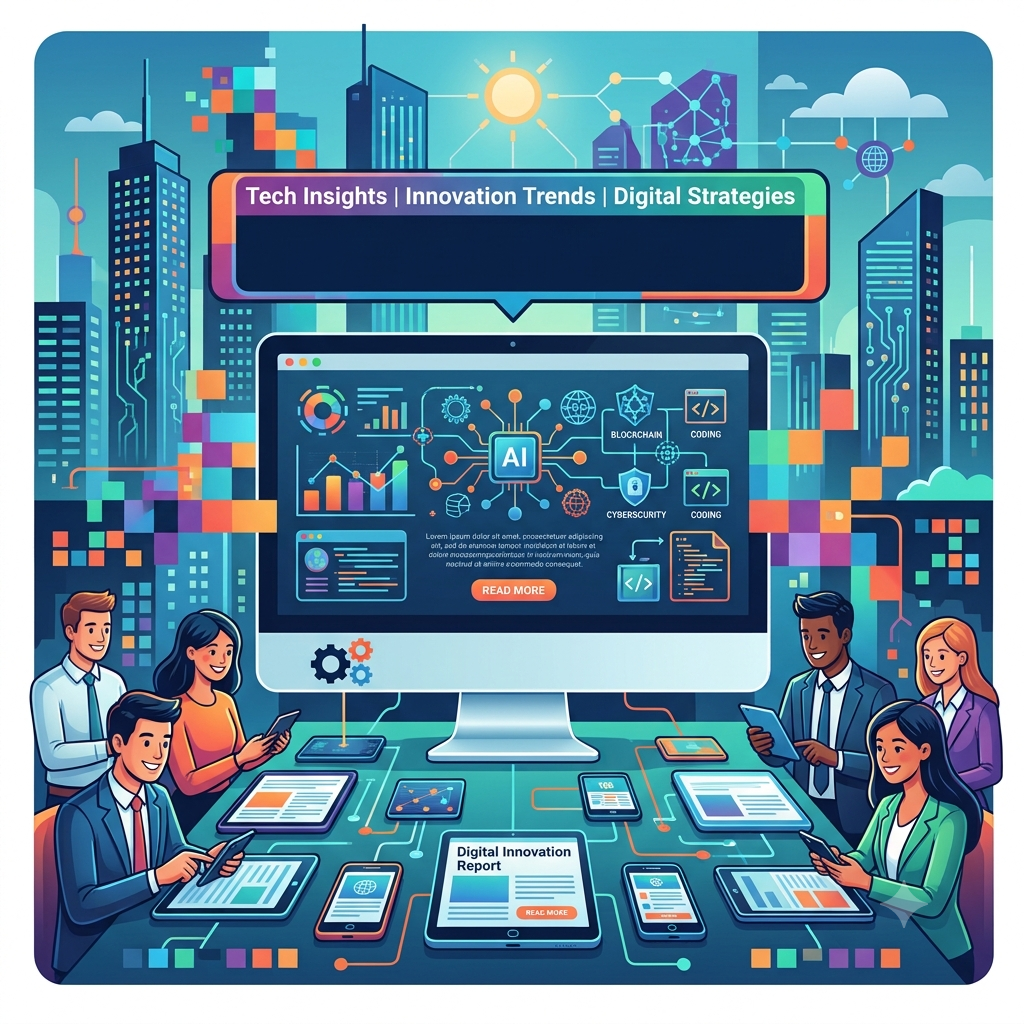
Enterprise software development in 2026 is about more than building applications. Businesses are looking for smarter workflows, connected systems, secure digital infrastructure, and software that can adapt as their needs change.
Artificial intelligence is transforming how software is designed and developed. AI agents are beginning to support multi-step workflows, while cloud platforms and API integrations help businesses connect systems that previously operated independently. At the same time, organizations must address cybersecurity, data quality, scalability, and the long-term cost of maintaining their technology.
For growing companies, the challenge is no longer simply choosing the newest technology. It is identifying which innovations solve real business problems.
In this article, we explore seven enterprise software development trends shaping 2026 and explain how businesses can use them to build more efficient, scalable, and future-ready digital solutions.
1. AI-Powered Software Development Is Moving Beyond Code Generation
Artificial intelligence has become an important part of the software development lifecycle. Modern AI-assisted tools can help developers generate code, explain unfamiliar functions, create test cases, document applications, and identify potential defects.
The next stage is agentic software development, in which AI systems can support multiple connected tasks, such as planning a change, generating code, running tests, and proposing fixes.
However, faster code generation does not automatically mean better software. Human review, automated testing, secure coding practices, and architectural oversight remain essential.
Businesses considering AI-powered software development should focus on practical outcomes:
- Shorter development cycles
- Faster prototyping and experimentation
- Improved test coverage
- Reduced repetitive engineering work
- Better documentation and maintenance workflows
The strongest results come when AI tools are integrated into a controlled development process rather than used without clear standards.
2. AI Agents Are Creating New Opportunities for Business Automation
Traditional business automation generally follows predefined rules. AI agents can go further by interpreting information, selecting from available actions, and coordinating multiple steps within an assigned workflow.
For example, an enterprise application could use AI to classify incoming support requests, retrieve relevant customer information, draft a response, and route the case to the appropriate team for approval.
Other potential applications include:
- Customer support workflow automation
- Document processing and information extraction
- Sales operations and CRM assistance
- Internal knowledge search
- Report preparation and data analysis
- IT service desk support
Organizations should introduce these capabilities carefully. AI agents need clearly defined permissions, access controls, monitoring, and approval requirements for sensitive actions.
A useful starting point is to automate one repetitive, measurable workflow before expanding AI across the business.
3. Custom Software Integration Is Becoming a Business Priority
Many organizations rely on a combination of CRM platforms, accounting tools, inventory systems, customer portals, marketing platforms, and industry-specific applications.
When these systems cannot exchange information effectively, employees often resort to manual data entry, spreadsheets, duplicate records, and disconnected reporting.
Custom software integration can connect these applications through APIs, webhooks, middleware, and carefully designed data workflows.
For example, an ecommerce business could connect its online store with inventory management, accounting, order fulfillment, and customer support systems. When a new order arrives, the relevant information can flow between systems without requiring employees to enter it repeatedly.
The benefits may include:
- Less manual administrative work
- More consistent business data
- Faster operational reporting
- Improved customer experiences
- Better visibility across departments
- Fewer errors caused by duplicate data entry
Successful integration begins with understanding how information moves through the business. Companies should map their existing systems, identify data ownership, define error-handling procedures, and establish monitoring before building new connections.
4. Cybersecurity Must Be Built Into the Software Lifecycle
Cybersecurity is no longer a final checkpoint before an application launches. It needs to be considered during requirements gathering, architecture design, coding, testing, deployment, and ongoing maintenance.
AI-assisted development makes this particularly important because developers can generate code quickly, but generated code still requires security review and validation.
A strong software security strategy may include:
- Secure authentication and authorization
- Multi-factor authentication for appropriate use cases
- Encryption for sensitive information
- Dependency and vulnerability scanning
- Code reviews and automated security testing
- Secure API design and rate limiting
- Logging, monitoring, and incident-response planning
- Regular updates and patch management
Businesses using AI agents should also review the permissions granted to those agents. An automated system should not have unrestricted access to sensitive customer data or critical business operations simply because it can perform tasks more efficiently.
Security controls should match the application’s risks, data sensitivity, and regulatory obligations.
5. Cloud-Native Applications Are Supporting Business Scalability
Cloud infrastructure gives businesses flexible options for deploying applications, managing data, and supporting changing workloads.
Cloud-native architecture can include managed cloud services, containers, automated deployment pipelines, observability tools, and independently deployable services where appropriate.
For a growing business, this can make it easier to introduce new features, support more users, and improve deployment consistency.
However, cloud migration alone does not guarantee lower costs or better performance. Poor architecture, unnecessary infrastructure, inefficient database queries, and uncontrolled resource consumption can increase expenses.
Before selecting a cloud architecture, organizations should evaluate:
- Expected user traffic and workload patterns
- Performance and availability requirements
- Data storage and backup needs
- Security and compliance obligations
- Monitoring and disaster recovery
- Infrastructure costs and future growth
The objective is to choose an architecture that supports the business without adding unnecessary complexity.
6. Data Quality Is Becoming Essential for AI-Ready Software
AI-powered applications depend on the information they receive. Inconsistent records, duplicate entries, outdated documents, and disconnected databases can reduce the usefulness of AI-generated insights.
Businesses should therefore treat data preparation as a core software development activity.
This can involve standardizing data formats, removing duplicates, establishing ownership, documenting data sources, and implementing validation rules.
For AI applications that use internal company knowledge, retrieval-augmented generation (RAG) may help connect language models to approved business documents and databases. The quality of the results still depends on the underlying information, retrieval process, access permissions, and evaluation methods.
A practical AI-ready data strategy should answer three questions:
- Is the information accurate and up to date?
- Can the application access only the data it is authorized to use?
- Can the business evaluate whether the resulting answers are useful and correct?
Preparing data properly can help businesses build more dependable analytics, search, reporting, and AI-assisted workflows.
7. User Experience Remains a Competitive Advantage
Even technically advanced software can struggle if employees and customers find it difficult to use.
Enterprise applications often involve complex workflows, multiple roles, and large amounts of information. Good UX design helps users complete tasks efficiently without needing extensive training.
Modern enterprise software should prioritize:
- Simple navigation and clear information architecture
- Responsive interfaces across devices
- Accessible design
- Useful error messages and recovery options
- Role-based dashboards
- Consistent workflows across integrated systems
- Performance and reliability
AI can also support more conversational interfaces and context-aware assistance. However, businesses should ensure that AI features improve the user journey rather than introduce additional steps or uncertainty.
The most effective design decisions are based on user research, workflow analysis, and measurable usability testing.
How to Choose the Right Enterprise Software Development Strategy
The latest technology trends can create valuable opportunities, but not every organization needs AI agents, a complete cloud migration, or a large-scale system redesign.
Before investing, evaluate the business problem first.
Define the objective. Identify whether the priority is reducing operational costs, improving customer service, connecting systems, increasing security, or launching a new digital product.
Assess the current technology stack. Understand which applications already work well and where integrations or process improvements are needed.
Prioritize measurable use cases. Choose projects with clear success metrics, such as reduced processing time, fewer manual errors, or faster customer response.
Build security into the design. Define access controls, data handling, testing, and maintenance requirements before development begins.
Plan for long-term ownership. Consider scalability, documentation, monitoring, future integrations, and ongoing support.
Measure the results. Compare actual business outcomes with the original objectives and use the findings to guide future investments.
A phased approach helps organizations reduce risk while learning which technologies deliver meaningful value.
Why Businesses Need a Future-Ready Software Development Partner
Building enterprise software requires more than writing code. Businesses need to align technology decisions with their processes, users, data, and long-term growth plans.
An experienced development partner can help evaluate requirements, design an appropriate architecture, build custom applications, integrate existing systems, and plan for security and maintainability.
Depending on the project, a software development engagement may involve:
- Custom enterprise application development
- AI application development and integration
- API development and system integration
- Cloud application engineering
- Workflow automation
- Web and mobile application development
- Software modernization and maintenance
The right approach depends on business goals, available resources, technical constraints, and the expected return on investment.
Build Smarter Digital Solutions with SquareBits
The future of enterprise software is not about adopting every new technology. It is about combining useful innovation with dependable engineering.
AI-powered development, intelligent automation, cloud-native applications, stronger cybersecurity, and seamless software integration can help businesses improve how they operate. But these benefits depend on thoughtful planning, reliable implementation, and continuous improvement.
SquareBits can be positioned as a technology partner for businesses looking to explore custom software solutions, modernize existing applications, and connect digital systems around their operational needs.
Planning your next software project? Connect with SquareBits to discuss your business requirements and identify a practical development strategy.
Frequently Asked Questions
1. What are the major enterprise software development trends in 2026?
Important trends include AI-assisted and agentic software development, business process automation, custom software integration, cloud-native engineering, secure development practices, data readiness, and improved user experience.
2. What is AI-powered software development?
AI-powered software development uses artificial intelligence to assist with tasks such as code generation, testing, documentation, debugging, and workflow automation. Developers remain responsible for validating quality, security, and functionality.
3. Why is custom software integration important?
Custom software integration allows business applications to exchange information and coordinate workflows. It can reduce manual data entry, improve reporting, and help departments work with more consistent information.
4. How can AI agents help businesses?
AI agents can assist with multistep tasks such as document processing, support-ticket classification, information retrieval, and report preparation. Their permissions, outputs, and actions should be governed according to business risk.
5. Is cloud-native software suitable for every business?
Not necessarily. Cloud-native development can support scalability and deployment flexibility, but the right choice depends on workload requirements, existing infrastructure, security needs, operational capabilities, and cost.
6. How can businesses make their software more secure?
Businesses should use secure design practices, appropriate access controls, encryption, dependency scanning, code reviews, vulnerability management, monitoring, and regular maintenance.
7. How should a company choose a software development partner?
Evaluate relevant technical experience, communication, project planning, security practices, integration capabilities, testing processes, documentation, and long-term support. Ask for evidence of relevant experience rather than relying only on general technology claims.
Leave a Reply